How to Scale a Cake Recipe for a Larger Crowd
By Claire Whitmore · Published · 3 min read
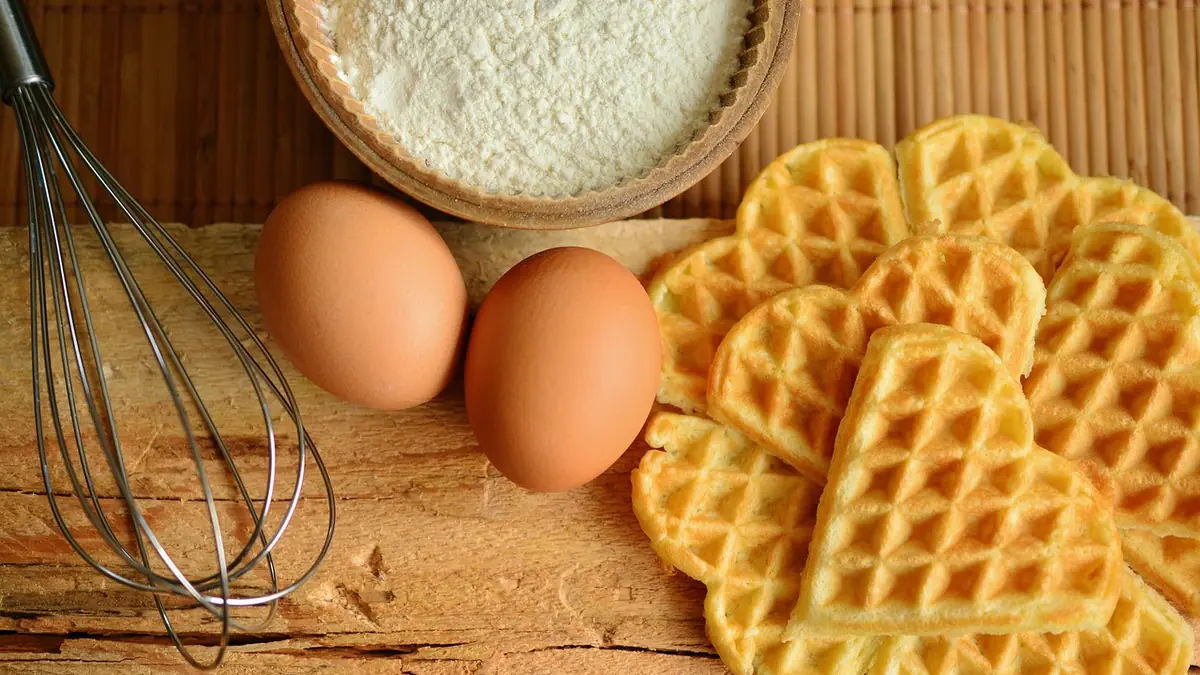
Scaling a cake recipe isn't just multiplying every number by two. Eggs, leaveners, and pan geometry behave differently when you double or triple a batch, and a cake that's too deep in the pan can dome, sink, or burn at the edges before the center sets.
This guide walks through the practical math: how to adjust ingredient ratios, choose the right pan size for the new volume, and estimate bake times so your cake comes out level and evenly baked—whether you're feeding 20 or 120.
Start With Volume, Not Just Multipliers
Before you double a recipe, figure out the total batter volume you need. A standard 8-inch round pan holds about 4 cups of batter; a 9-inch round holds about 6 cups; a 9x13-inch sheet pan holds 12 to 14 cups. If your original recipe makes two 8-inch rounds (8 cups total) and you need three 9x13 sheets, you'll need roughly 36 to 42 cups—about 4.5 to 5 times the original batch.
Work in weight where possible. One cup of all-purpose flour weighs about 120 grams; a large egg weighs about 50 grams without the shell. Converting your recipe to grams first makes scaling accurate and repeatable, especially when you're multiplying by 1.5 or 2.5 rather than a clean whole number.
- 8-inch round pan: ~4 cups batter
- 9-inch round pan: ~6 cups batter
- 9x13-inch sheet pan: 12–14 cups batter
- 10-inch bundt pan: 10–12 cups batter
Adjust Eggs and Leaveners Carefully
Eggs are the trickiest ingredient to scale. Most cake recipes rely on whole eggs, and you can't easily add half an egg. For a 1.5x batch, beat one egg and weigh out half (about 25 grams); for a 2.5x batch, use two whole eggs plus one beaten egg weighed to 25 grams. Don't just round up—extra egg makes the cake spongy and can cause it to shrink after baking.
Leaveners like baking powder and baking soda don't scale linearly beyond about 3x. If you quadruple a recipe, reduce the total leavener by roughly 10–15% to avoid a soapy taste or a cake that rises too fast and collapses. For very large batches (5x or more), consider baking in multiple pans rather than one giant pan so the chemistry stays predictable.
Choose the Right Pan Size and Depth
Pan depth matters as much as diameter. Most cake pans are 2 inches deep, and you should fill them no more than two-thirds full—about 1.5 inches of batter. If your scaled batter would exceed that, split it between two pans or use a deeper pan (3 inches) and extend the bake time.
For crowds, sheet pans are efficient: a 9x13-inch pan serves 12–16 modest slices, while an 18x13-inch half-sheet pan serves 24–30. If you're comparing formats for a party, our sheet cake vs. layer cake cost and serving comparison breaks down the trade-offs in time, yield, and frosting.
- Fill pans no more than 2/3 full
- Use 2-inch-deep pans for standard layers
- Switch to 3-inch-deep pans for tall cakes
- Half-sheet pan (18x13) serves 24–30
Estimate Bake Time by Pan and Depth
Bake time doesn't double when you double the batter—it increases with the depth of the batter, not the total volume. A 9-inch round with 6 cups of batter bakes in 30–35 minutes at 350°F; the same batter split between two 9-inch rounds bakes in 25–30 minutes. A 9x13-inch pan with 12 cups takes 35–45 minutes. A half-sheet pan with 24 cups can take 45–55 minutes.
Start checking 5–10 minutes before your estimated time and rotate the pan halfway through. If the top browns too fast, tent it loosely with foil. Always rely on a cake tester or skewer—done means moist crumbs, not wet batter. For large batches, an instant-read thermometer is more reliable: cake centers set around 200–210°F.
- 9-inch round (6 cups): 30–35 min
- Two 9-inch rounds (12 cups total): 25–30 min
- 9x13-inch (12–14 cups): 35–45 min
- Half-sheet (24 cups): 45–55 min
| Pan size | Batter volume (cups) | Typical servings | Bake time (min) |
|---|---|---|---|
| 8-inch round (2 in deep) | 4 | 8–10 | 25–30 |
| 9-inch round (2 in deep) | 6 | 10–12 | 30–35 |
| 9x13-inch sheet | 12–14 | 12–16 | 35–45 |
| 10-inch bundt | 10–12 | 12–16 | 40–50 |
| Half-sheet (18x13) | 24 | 24–30 | 45–55 |
| Three 8-inch rounds | 12 | 16–20 | 25–30 (per layer) |
Scale Frosting and Filling Separately
Frosting doesn't need to scale at the same rate as cake batter. A double batch of cake usually needs only 1.5x the frosting because larger cakes have less surface area relative to volume. As a rule, 4 cups of frosting covers an 8-inch two-layer cake; a 9x13-inch sheet cake needs 5–6 cups; a half-sheet pan needs 8–10 cups.
If you're serving outdoors or in a warm room, choose a more stable frosting. Our comparison of buttercream vs. cream cheese frosting explains which holds up better and when to switch. And if you're building a larger dessert spread, this beginner's guide to building a dessert table helps you plan quantities so nothing runs out.
Test and Record Your Scaled Recipe
The first time you scale a recipe, bake a small test batch—one pan—before committing to the full crowd. Note the actual batter weight per pan, the bake time, and any doming or sinking. Keep a simple log: original recipe, multiplier, pan size, batter weight, oven temperature, and minutes. After two or three trials you'll have a reliable conversion you can reuse.
For big events, bake layers a day ahead and freeze them wrapped tightly; they're easier to handle and frost more cleanly. If you're planning a full party menu, this $150 spring party budget plan shows how cake costs fit into a larger food budget without last-minute scrambling.
- Scale by batter volume and weight, not just multipliers—use grams for accuracy.
- Adjust eggs and leaveners carefully; reduce leaveners by 10–15% above 3x batches.
- Bake time depends on batter depth, not total volume; check early and rotate pans.
- Frosting scales at about 1.5x when cake doubles, and stable frostings matter for large events.
Claire has spent years planning seasonal parties and baking for friends, family and community events. She writes practical guides on cake quantities, dessert tables and stress-free hosting. Her focus is on simple, tested advice that helps home bakers feel confident.