What Does It Cost to Bake a Cake from Scratch?
By Claire Whitmore · Published · 5 min read
Baking a cake from scratch feels like a bargain compared to a bakery ticket, but the real cost depends on what you already have in the pantry and how generously you frost. A basic two-layer 8-inch cake serves 12 to 16 and uses ingredients that range from a few dollars to more than twenty depending on butter and vanilla prices in your area.
Below we itemize typical ingredient costs for a standard butter cake with American buttercream, show how the numbers shift with chocolate or carrot cakes, and compare the per-serving cost with what a bakery charges. The figures are ranges from mid-range U.S. supermarkets, not precise quotes, so use them as a planning tool.
The core ingredients and what they cost
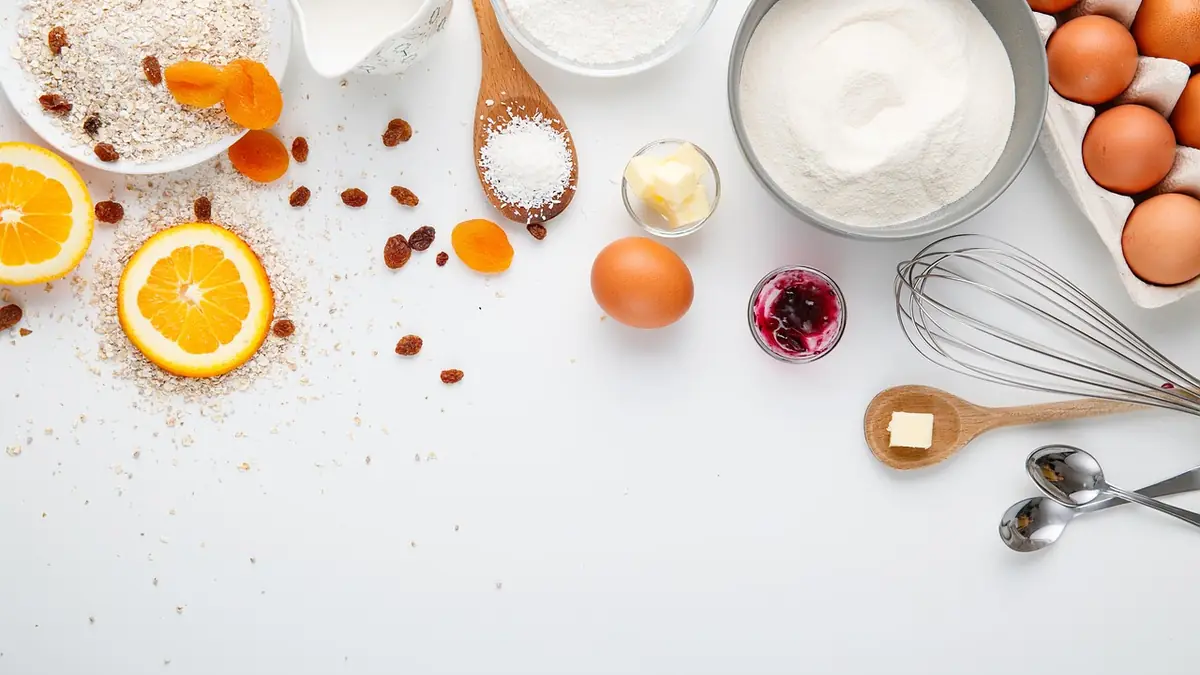
A classic two-layer vanilla butter cake calls for flour, sugar, butter, eggs, milk, baking powder, salt, and vanilla. At typical supermarket prices, all-purpose flour runs about $0.50 to $0.75 for the 2½ cups needed, granulated sugar about $0.40 to $0.60 for 1½ cups, and baking powder and salt together under $0.20. Those pantry staples are cheap; the cost climbs with the perishables.
Butter is the biggest line item. Two sticks (8 ounces) of unsalted butter cost roughly $2.50 to $4.50 depending on brand and region. Three large eggs add $0.75 to $1.50, and 1 cup of whole milk about $0.30 to $0.50. Pure vanilla extract is the quiet budget killer: 2 teaspoons of real extract costs $0.80 to $1.60, while imitation vanilla drops that to $0.10 to $0.20. Total cake-layer cost lands around $5 to $9.
- Flour, sugar, leaveners: $1.10–$1.55
- Butter (8 oz): $2.50–$4.50
- Eggs (3 large): $0.75–$1.50
- Milk (1 cup): $0.30–$0.50
- Vanilla (2 tsp): $0.10–$1.60
Frosting is where budgets stretch
American buttercream is the most economical finish: 1 cup (2 sticks) butter, 3 to 4 cups powdered sugar, a splash of milk, and vanilla. Butter adds $2.50 to $4.50, powdered sugar $0.60 to $1.00, and flavoring up to $0.80. A batch generous enough to fill and frost a two-layer cake costs roughly $4 to $6.50. Cream cheese frosting swaps in an 8-ounce block ($2 to $3.50) and slightly less sugar, landing in a similar range.
If you want a naked cake or a light crumb coat, you can halve the frosting and save $2 to $3, but most celebrations expect a full coat. Decorations are optional but add up: sprinkles ($1.50–$3), food gel colors ($2–$5 per shade), and fresh berries ($3–$6 per pint) can double the finishing budget. For a crowd, a sheet cake vs layer cake comparison shows how pan choice affects both frosting quantity and servings.
- American buttercream: $4.00–$6.50
- Cream cheese frosting: $4.50–$7.00
- Sprinkles or gel colors: $1.50–$5.00
- Fresh fruit topping: $3.00–$6.00
| Cake type | Total cost | Servings | Cost per serving |
|---|---|---|---|
| Homemade vanilla butter cake, frosted | $9–$15.50 | 12–16 | $0.60–$1.30 |
| Homemade chocolate cake, frosted | $8–$14 | 12–16 | $0.55–$1.20 |
| Homemade carrot cake with cream cheese | $12–$19 | 12–16 | $0.75–$1.60 |
| Bakery standard two-layer cake | $35–$65 | 12–16 | $3.00–$5.50 |
| Bakery custom decorated cake | $50–$90 | 12–16 | $4.00–$7.50 |
Total cost for a standard two-layer cake
Add the cake layers ($5–$9) to a full batch of buttercream ($4–$6.50) and you get $9 to $15.50 for a plain frosted two-layer 8-inch cake that serves 12 to 16. That works out to roughly $0.60 to $1.30 per serving. If you add sprinkles and berries, budget $12 to $21 total, or $0.75 to $1.75 per serving. These figures assume you own the pans, mixer, and parchment; they exclude electricity and your time.
Chocolate cake is often slightly cheaper because cocoa powder replaces some of the expensive vanilla and butter can be reduced. A chocolate layer cake with chocolate buttercream typically runs $8 to $14, or $0.55 to $1.20 per serving. Carrot cake with cream cheese frosting and nuts swings higher, $12 to $19, because of the nuts, raisins, and extra frosting. If you need a larger batch, scaling a cake recipe for a larger crowd can bring the per-serving cost down because pantry staples buy in bulk.
- Vanilla butter cake, frosted: $9–$15.50
- Chocolate cake, frosted: $8–$14
- Carrot cake with cream cheese: $12–$19
- Per serving: $0.60–$1.75
How bakery prices compare per serving
A bakery two-layer 8-inch cake typically sells for $35 to $65, and custom decorated cakes run $50 to $90 or more. For 12 to 16 servings, that is $3 to $5.50 per serving for a standard bakery cake and $4 to $7.50 for a custom one. The gap is real: homemade saves roughly 70 to 85 percent per serving, but it does not account for the two to three hours of mixing, baking, and decorating.
The comparison shifts when you value your time. If you earn $25 per hour and spend 2.5 hours on the cake, add about $62 of notional labor, which makes homemade look expensive. Most home bakers treat that time as leisure or a gift, so the ingredient comparison is the fairer one. When you are feeding a crowd, the savings per serving grow because bakery cakes scale in price almost linearly while home ingredients do not.
- Bakery standard cake: $3.00–$5.50 per serving
- Bakery custom cake: $4.00–$7.50 per serving
- Homemade: $0.60–$1.75 per serving
- Break-even on time: roughly 2–3 hours
Hidden costs and ways to trim the budget
The ingredient total leaves out pans, parchment, cake boards, and boxes, which can add $5 to $15 if you are starting from scratch. It also ignores oven electricity, typically $0.15 to $0.40 per bake, and dishwasher or hand-washing time. None of these are dealbreakers, but they explain why the first homemade cake feels pricier than the tenth.
To trim costs, buy butter and eggs on sale and freeze butter for up to a few months. Use imitation vanilla in baked layers and save pure extract for frostings where the flavor is more prominent. Skip the cake board if you are serving from the pan, and choose a simple buttercream instead of a custard-based frosting that requires more eggs and butter. Planning around seasonal fruit also keeps toppings cheaper; a spring party budget plan shows how to allocate costs across the whole event.
- Stock up on butter and eggs when on sale
- Use imitation vanilla in cake layers
- Serve from the pan to skip boards and boxes
- Choose buttercream over custard frostings
- Top with seasonal fruit instead of imported berries
Storage and shelf life affect the real cost
A homemade cake keeps for about 3 to 4 days at room temperature if unfrosted, or 2 to 3 days once frosted, and up to a week in the refrigerator. If you bake ahead and the cake dries out or the frosting weeps, you lose the ingredient cost and the time. Knowing how long a baked cake stays fresh helps you plan the bake close enough to the party without waste.
Freezing is the budget saver: unfrosted cake layers freeze well for 2 to 3 months when wrapped tightly, so you can bake when butter is on sale and frost later. That flexibility lowers the effective cost per cake and reduces last-minute bakery purchases. For a full timeline on freshness, see how long a baked cake stays fresh.
- Unfrosted cake: 3–4 days at room temperature
- Frosted cake: 2–3 days at room temperature
- Refrigerated frosted cake: up to 1 week
- Frozen unfrosted layers: 2–3 months
- A frosted two-layer homemade cake costs $9–$15.50 and serves 12–16, or about $0.60–$1.30 per serving.
- Bakery cakes run $3.00–$7.50 per serving, so homemade saves 70–85 percent on ingredients alone.
- Frosting is the second-largest cost after butter; halving it or choosing buttercream over custard saves $2–$3.
- Buy butter and eggs on sale, use imitation vanilla in layers, and freeze unfrosted cakes to cut costs further.
Claire has spent years planning seasonal parties and baking for friends, family and community events. She writes practical guides on cake quantities, dessert tables and stress-free hosting. Her focus is on simple, tested advice that helps home bakers feel confident.