10 Spring Party Tips and Ideas for a Stress-Free Bash
By Claire Whitmore · Published · Updated · 5 min read
Spring parties have a way of sneaking up on you. The weather turns, the calendar fills, and suddenly you're hosting a dozen people with a fridge full of nothing. The good news: spring is the most forgiving season for entertaining. Produce is cheap and colorful, flowers are everywhere, and you can move the party outside if the guest list outgrows your kitchen.
These ten tips focus on the decisions that actually matter—how far ahead to send invitations, how much food to make, which desserts hold up best on a warm afternoon, and how to set up a dessert table that doesn't collapse under its own weight. Use them as a checklist, not a rulebook. Skip what doesn't fit your space, budget, or crowd.
1. Send Invitations 3–4 Weeks Ahead
For a casual gathering of 10–20 people, three weeks is plenty. If you're planning a seated meal, a shower, or anything that requires a headcount for rentals, give guests four weeks. Spring weekends book up fast with sports, weddings, and holidays, so the earlier you claim a date, the fewer conflicts you'll hear about.
Skip the paper unless the party is formal. A simple digital invite with the date, time, address, dress code (or lack of one), and a line about food is enough. Ask about dietary restrictions right in the RSVP—it's easier to plan a menu around two vegetarians and one nut allergy than to improvise on the day.
2. Build the Menu Around What's Actually in Season
Spring produce does the heavy lifting: asparagus, peas, radishes, strawberries, rhubarb, and tender greens. A menu of three or four dishes that share ingredients keeps shopping and prep manageable. Think a pea and ricotta tart, a big green salad with radishes, roasted asparagus, and a strawberry-rhubarb dessert.
Aim for 4–6 bites per person for a two-hour cocktail party, or one main plus two sides for a seated lunch. If you're serving cake, plan on 1.5 slices per guest—people eat more dessert at daytime parties than they think they will. For more on pairing flavors with the season, see How to Match Cake Flavors to a Seasonal Menu.
- Choose 3–4 dishes that share 5–6 core ingredients.
- Plan 4–6 bites per person for a 2-hour party.
- Buy fruit 1–2 days before; it ripens fast on a counter.
- Keep one no-cook dish for hot days.
3. Set a Loose Timeline (and Stick to It)
Spring parties often drift into evening because the weather is pleasant. A loose timeline—guests arrive, drinks and snacks for 45 minutes, main food out, dessert 30–45 minutes later—keeps the food from sitting out too long and gives you a natural end point. Write it on a sticky note and put it where you'll see it.
Buffer everything by 15 minutes. Someone will be late, the oven will run slow, or the salad will need more dressing. If you're hiring help or recruiting friends, tell them the timeline too. A party where the host is calm is a party where guests relax.
4. Use Spring Colors Without Going Overboard
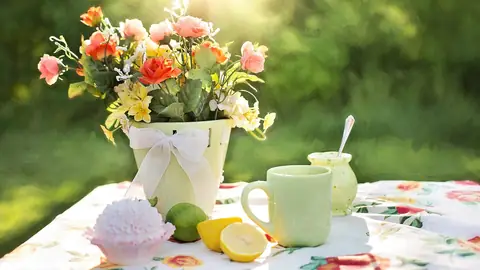
Pastels are the obvious choice, but too many soft shades can read as a nursery. Pick one anchor color—sage green, butter yellow, coral—and one neutral, then repeat them in flowers, napkins, and the dessert table. Two colors plus white or kraft paper almost always looks intentional.
If you want a palette that feels timely without being cliché, a monthly color guide helps. Seasonal Party Colors by Month: A Simple Palette Guide walks through combinations that work for April, May, and June without defaulting to Easter pastels.
5. Plan for Both Indoors and Out
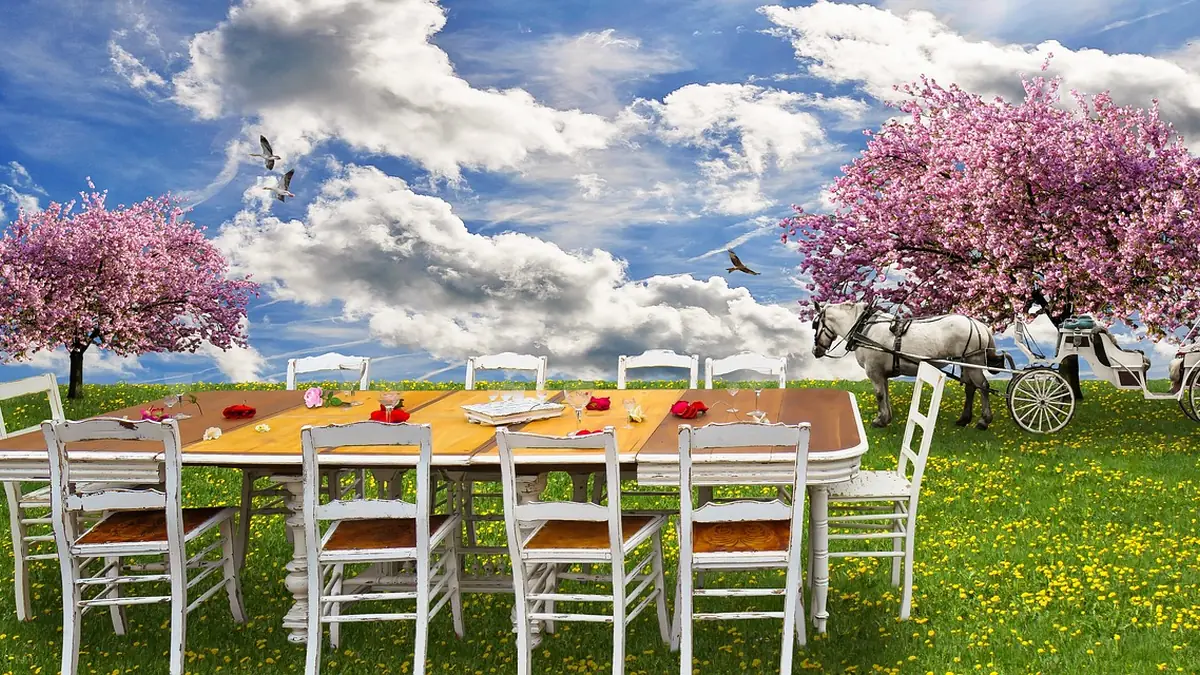
Spring weather is a coin flip. Set up food indoors and seating outdoors, or vice versa, so you can pivot without moving everything. Keep a stack of throws or blankets for a cool evening and a backup indoor spot for the dessert table if it rains.
Bugs are the other wildcard. Citronella candles and a fan help, but the simplest fix is to keep food covered between servings and skip anything that sits out for more than two hours. If you're serving cream-based desserts, keep them chilled until the last minute.
6. Build a Dessert Table That Holds Up
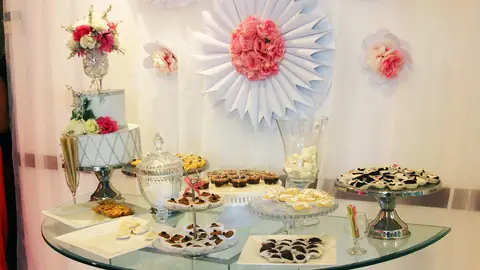
A spring dessert table should look abundant but not collapse. Choose two or three items that can sit at room temperature—cookies, bars, a bundt cake—and one that needs chilling, like a strawberry trifle or cream cheese frosting on a carrot cake. That balance keeps you out of the fridge every five minutes.
For structure, use boxes and cake stands at different heights. Put the tallest item in back, the plates and napkins at one end, and leave space between platters so people can serve themselves. A beginner-friendly layout is covered in A Beginner's Guide to Building a Dessert Table.
- 2–3 room-temperature desserts, 1 chilled dessert.
- Use 3 heights: table, box, cake stand.
- Put plates and forks at one end, not both.
- Label anything with nuts or dairy.
7. Choose Frosting That Survives the Afternoon
Buttercream is the safer bet for a spring party, especially if the cake will sit out. It holds its shape at room temperature for several hours and pipes cleanly. Cream cheese frosting is delicious but softens fast; if you use it, keep the cake chilled until serving and don't plan on it sitting out for more than an hour or two.
The choice also depends on the cake. Carrot cake and red velvet are traditional with cream cheese, but a vanilla or lemon cake holds buttercream better. For a side-by-side comparison, see Buttercream vs. Cream Cheese Frosting: Which to Use When.
8. Keep Drinks Simple and Self-Serve
One signature drink, one non-alcoholic option, and water are enough. A spring punch with lemonade, mint, and strawberries scales easily and looks festive without a bartender. Put cups, ice, and a ladle at one end of a table so people can help themselves.
If you're serving wine, plan on half a bottle per person for a two-hour party, and have a few bottles of something lighter—rosé, a crisp white—chilled. Beer and sparkling water fill in the gaps. Skip the elaborate cocktail menu unless you genuinely enjoy playing bartender.
| Guest Count | Food per Person | Cake Slices | Drinks per Person | Prep Time (Day Of) |
|---|---|---|---|---|
| 8–10 | 4–5 bites + 1 main | 1–1.5 | 2 drinks | 2–3 hours |
| 12–15 | 5–6 bites + 1 main | 1.5 | 2–3 drinks | 3–4 hours |
| 20–25 | 6–8 bites + 1 main | 1.5–2 | 2–3 drinks | 4–5 hours |
| 30+ | 6–8 bites + 2 mains | 1.5–2 | 2–3 drinks | 5+ hours or help |
9. Make a Cake That Stays Fresh
Baking the cake a day ahead is one of the best ways to reduce day-of stress. Most butter cakes and sponge cakes actually improve overnight if wrapped well. Frost the cake the morning of the party, or the night before if you have fridge space and the frosting is stable.
How long the cake stays fresh depends on the recipe and storage. A frosted butter cake keeps 3–5 days in the fridge; a cream cheese-frosted cake is best within 2–3 days. For a full breakdown by cake type, see How Long Does a Baked Cake Stay Fresh?.
10. Set a Budget Before You Shop
Spring parties can be as cheap or as expensive as you make them. Flowers, rentals, and alcohol are the three line items that balloon fastest. Set a total budget, then allocate roughly 40% to food, 20% to drinks, 15% to decor, and keep the rest as a buffer.
For a concrete example of what a small spring party costs, How to Plan a Spring Party on a $150 Budget breaks down a menu and decor list that feeds 12 people without skimping. Use it as a template even if your number is higher.
- Send invitations 3–4 weeks ahead and collect dietary needs in the RSVP.
- Plan 5–6 bites per person and 1.5 cake slices per guest for a 2-hour party.
- Choose buttercream for cakes that sit out; keep cream cheese frosting chilled.
- Set a budget with a 15% buffer and allocate roughly 40% to food.
Claire has spent years planning seasonal parties and baking for friends, family and community events. She writes practical guides on cake quantities, dessert tables and stress-free hosting. Her focus is on simple, tested advice that helps home bakers feel confident.